Showing posts with label action heroines. Show all posts

Thursday, January 31, 2013

THE AMERICANS on FX


I just got finished watching the pilot for the new FX series Mr. and Mrs. Smith 2: Russian Edition, and I have to say that the show's creators need to watch The Carrie Diaries, because there's nothing worse than having to hear Fleetwood Mac's "Tusk" not once, but twice, during two supposed action-packed sequences.  Really, the 80s offered so much more interesting music than that tune.  Basically, I checked out this show for the music, and hopeful for the notion that Felicity (Keri Russell) would make a kick-ass action heroine (when she wasn't getting knocked up and making pies).  Here she's already got a couple of kids and she makes brownies.  Yawn.


Really, the show opens like an 80s version of Alias, with Russell seducing some Department of Justice blabbermouth, terrible wig and leather strapless dress included.  She gets him off while he blabs, and blabs, and blabs.  Since the ads for this show have been so ubiquitous, we know she's a Russian spy, and so is this other guy with really bad hair and pursed Russian lips (Philip).  Some mission to kidnap a defector goes south, and they wind up stashing the guy in their trunk while they lead the ideal suburban life.  Except it's not so ideal, because Felicity/Elizabeth is a loyalist, whereas he likes the perks of American life--such as soft serve ice cream and going to the mall.  Oh and they have adorable patriotic kids, and we have to watch scenes where they sit around together being a family.  I suppose we are meant to be impressed by how good they are at faking it, although Philip clearly has drunk the American Kool-aid (Oh Yeah)!


Turns out, just like in Mr. and Mrs. Smith, that the hubby is the softie, who really loves his "wife" and want to defect and live happily ever after, to protect their family.  Unfortunately, she cannot get excited about him in his family mode--he has to start killing people to get her hot.  I am not kidding you.


All those dreams are put into jeopardy when the new neighbor (with his own nuclear family) turns out to be an FBI counter-intelligence expert who thinks there's something a little off about Philip.  Did I forget to mention that the defector in the trunk happened to rape Felicity/Elizabeth while she was training to be a KGB agent?  And THAT motive turns Philip from a "let's defect too" supporter to a "let's kill all guys who look at my women funny" kind of guy, which turns Felicity/Elizabeth on.  Then we have to watch them have sex in their car like a couple of horny high schoolers.  The best part is that some of this "action" happens while Phil Collins sings "In the Air Tonight" like an ode to Miami Vice, but not nearly as good.  Michael Mann did not direct this show, no siree.


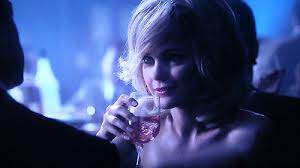
I think that this particular promo image sums things up.  We can expect Felicity/Elizabeth to get sexy every so often, because that's how women gather intelligence or spy, OBVIOUSLY, and the majority of the show to be about men calling the shots and touching her face, now, and in the past, because she's so damn pretty.  Do I sound like I am simultaneously disappointed and annoyed by this giant cliche of a show?  Yes, I am.


Don't waste your time with this piece of sh**, and watch Ashes to Ashes instead.  This British show has a hard-nosed female cop, with a kid, and it has the best 80s music from that period, PERIOD.  This spin-off of the Brit show Life on Mars has a couple of the same character actors (Philip Glenister), but the truly amazing Keeley Hawes in the lead role puts a retro-cool show like The Americans to shame.  Or watch Continuum on Syfy instead.  Trust me on this one.

Ps. What is it with the Russians being the bad guys again, like the only thing to do these days is to bring back the cold war?  In the last month, I've watched Salt, an episode of Elementary, and this show, and the Russians are back, and they are BAD.  Huh?!

Sunday, May 6, 2012

Guilty Pleasure--Syfy's LOST GIRL


I'm a huge fan of adult Urban Fantasy fiction.  I've devoured books by Kim Harrison, Kelly Armstrong, Charlaine Harris, Ilona Andrews, D.D. Barant, Seanan McGuire, and Gail Carringer, just to name a few.  And NO, Twilight does not count in this grouping.  I could barely get through 20 pages of that book.  Lost Girl is basically an Urban Fantasy woman-driven novel come to life, similar to True Blood (whose last season I found virtually unwatchable), with a dash of USA's La Femme Nikita thrown in for some action vibe.  The show is Canadian, and originally aired on Canadian TV before Syfy picked it up; they are showing seasons one and two in tandem right now.  It's part of "Powerful Mondays," along with shows such as Being Human and Eureka.

Those Canadians know a thing or two about putting together a solid urban fantasy series, with the great Blood Ties, and the slightly less so Forever Knight.  Lost Girl's is written and created by a woman, and is an adult series, rated "mature" and purposely full of sexual situations.  Thankfully, nobody goes to high school on this show.

The series centers on the supernatural walking among us, and stars Anna Silk as a voluptuous, ass-beating succubus whose main power comes from sex.  Now you might think, "Great, another show where a woman's strength comes from her sexual power!" but the show is not that simple or that cliched.  Here's a synopsis from an interview with creator, show-runner (for the first season) and writer Michelle Lovretta:

"Lost Girl is the story of Bo, a young woman who realizes she’s a succubus (a woman who uses sex to feed, heal… and kill) when she hits maturity and drains her high school boyfriend to death during her first sexual encounter. Oops. She tries to run from her past and her nature, until encountering others like her and learning she’s part of the Fae, an ancient race living amongst humans and feeding off of them in different ways. They pressure her to join their ranks, but she distrusts their motives and chooses to go it alone, navigating the terrain between the humans and the Fae while trying to figure out her origins and gain control of her predatory sexual hungers."

Lovretta goes on to explain what the series shares with other fantasy series such as Buffy the Vampire Slayer, Xena, and Dollhouse, but the differences are what interest me.
  • Bo is bisexual
The show is tailor-made for "shippers" to follow (if you're not clear what that phrase means, you should check out this EW article). Bo's two primary love interests are with a male werewolf, Dyson, who almost never has a shirt on, and a female scientist, Lauren, who is smart, gorgeous, witty, dependable--OK, you get whose team I'm on.  The show is littered with hot guys, and they are really fun to look at (although I'd be even more into it if they made out with each other); but the heart of the show, to me, seems to be the relationships between women.  AfterEllen.com is pretty devoted to the series, mostly because Bo's attraction to and desire for Lauren is never an "issue," but an understandable reaction to their friendship and Zoie Palmer's incredible brainy hotness.  Oh, and scenes like this:


Now some queer women might complain at how stereotypically femme and beautiful these women are, but A) it's still exciting to see these kinds of scenes on cable, and B) their sexual relationship is one based on friendship and trust, and has been carried through the show's series--it's not some titillating one off.  Now Dyson's a fine specimen and all, but now that *spoiler he gave his love for Bo to some ancient Fae in order to save Bo's life in the season one finale, she can get back to spending quality time with Lauren.  Lovretta praises Syfy for their interest in queer representations:

"They’ve been really supportive and their marketing campaign has been fabulous and they are pairing us with Being Human, which is a lovely show. Because I’ve had in development a couple of different projects there that had lesbians as leads and nobody there ever batted an eye – no one was saying ‘that’s going to marginalize your audience,’ there was nothing like that. Which is, I’m coming to appreciate, a great gift."
  • Bo and Kenzi's platonic friendship is what drives the series
Ostensibly, the show is a private investigator series with some mythology aspects to explain the world of the Fae that Lovretta has gracefully built.  Bo and Kenzi are roommates, best friends, and have saved each other's butts multiple times.  The show makes clear that, even though Bo is bisexual, she doesn't desire or have sex with everyone.  Kenzi is her confidante and her support network, and Ksenia Solo is kind of the reason I watch the show.  She's full of snappy lines and awesome wigs and goth goodness.  Yes, she's technically a sidekick, but most of the time I think she's more interesting than Bo, and the Kenzi/ Detective Hale (played by K.C. Collins) ass-kicking team  is better than the Bo/Dyson pairing any day.  They have much better banter.

Fans can produce such amazing content.  I found this collage at this site.  While I'd clearly watch a show devoted to Kenzi, the show shines because of the close, platonic bond that she and Bo share with each other.  Sure, the sexual hijinks give the show it's kick, but the affection and trust that these women have are strong and unwavering.

  • the hottest men on the show are Black Men
Following the (convenient) mythology of the Fae universe, many of the Fae are supernaturally gorgeous, and thankfully, the show isn't just a sea of white, although characters like the aforementioned Detective Hale, who is a Siren, and the Light Fae leaders "The Ash" and "The Black Thorn" (Light Fae name their leaders after trees) do not have the central roles I'd like them to have.  But they are beautiful, beautiful men, and if I'm devoting so much of this post to eye candy, it's only fair to show them off.

The guy the Black Thorn is about to fist bump is Trick, the proprietor of the Fae pub, The Blood King, and (supposedly revealed in a future episode), Bo's Grandad.  He's also a phenomenal actor, conveying pathos, strength, wit--and he happens to be a little person.  Granted, fantasy television will always be much more eager to give little actors their due, and Peter Dinklage's Game of Thrones powerhouse performance is just one example (although everything that man has EVER done, from Nip/Tuck, to Threshold, to The Station Agent is phenomenal).  Still, Richard Howland is wonderful, and his relationship with Kenzi is definitely one of the series' highlights.
  • Michelle Lovretta is the creator, writer, co-show runner, and executive producer for the series
As Melissa Silverstein's remarkable and brilliant website has made endlessly apparent, women have a very small foothold in film and television, and that dang glass ceiling is still firmly in place.  In interviews, Lovretta plays down her role as a woman in the industry, suggesting that many male creators have produced shows that headline women. Okay, so there are television shows that are created and run by men that have strong female leads.  Big f*$#ing deal.  That's not good enough when one considers that those shows are still in the minority of stuff that's out there.  And Charlie Sheen is getting another show?!  Just saying.

Lovretta's involvement in creating a show that focuses on female friendships and diverse sexualities is exciting and crucial to the pantheon of stories from women's perspectives.  Those stories need to be heard in all their richness and diversity.  Yes, this show sometimes has really goofy dialogue, wooden acting, and extremely superficial storylines.  Still, Lost Girl is better than a certain show with five times the budget, that has become buried under far too many story arcs, and is focused on a whiny, southern blonde lady.  Although, thinking back to the embarrassing special effects used on the season four premiere of True Blood, what budget??  The only connection that show has to the books on which its based, at this point, is that it's making Charlaine Harris a ton of money.  She deserves it.  If Harris wrote some more queer characters into her world, Lovretta might be a little more interested.  And at least there are no hundreds-year-old vampires attending high school.

Wednesday, April 25, 2012

GAME OF THRONES and scary ladyparts


I try to convey to my students, and firmly believe that, one can be a passionate feminist and still enjoy things that are not necessarily feminist.  Really, if feminists ONLY supported feminist things, feminists would spend most of their time avoiding most of U.S. and U.K. popular culture.  First of all, "feminism"--as a movement, a political stance, a set of ideas, an identity, or an attitude--is not a fixed category.  "Feminism" is constantly changing and mutating, and most feminists recognize that as the world changes, so do ideas.  Feminism's commitment to intersectionality and engagement with new technologies are just two important shifts in thought that have occurred over the last twenty years.

Still, not all things are feminist, and just because you are a feminist and like something, does not make "object X" feminist.  This flawed logic has been used by plenty of feminists and postfeminists to justify the celebration of a whole variety of texts.  I understand the desire to maintain one's principles and consistency in one's beliefs, but cultural critics and consumers need to thoughtfully understand and examine their own contradictions.  I'm not saying that some pleasures should be guilt-free either, but guilt can be a useful tool when examined more closely.  The conflicts that feminists feel about their own pleasures can be extremely productive.

For instance, here's an example of a pop cultural mash-up that I recently enjoyed, and I STILL feel terrible about enjoying it, and have yet to stop talking about the problems this particular representation raises.  In episode 3 of this season's Mad Men, entitled "Tea Leaves," viewers finally got a glimpse of the unfairly reviled Better Francis (formerly Draper), and the icy blonde January Jones is shown wearing a fat suit.  Her weight is an issue in this episode, since during a doctor's visit to acquire diet pills, Betty finds out that she has a lump near her thyroid and that she might have cancer.  This episode explores issues of aging femininity and beauty culture while simultaneously positioning Jones's body as no longer ideal and pathological.  Like Pete, over the last four seasons Betty has been situated as a villain, albeit a more nuanced one, and the reaction to her changed appearance in the blogosphere was fairly venomous at times.  At first, I avoided the Fat Betty video that was making the rounds, worried that it reeked of fat hatred.  Then I watched it.  Then I showed the video to my partner, with much contextualizing and caveats.  Let's just say that every once in a while, one of us will utter a "bam-a-lam" and then laugh guiltily.  Here I'm disseminating it:


I still have problems with this video, and I think that my discomfort is a good thing.  Examining the pleasures and pains that this video brings to me is important for my continuing evolution as a feminist.  After this week's episode where Meghan gobbles up some orange sherbet (in "Far Away Places"), I'm certain that more ice cream eating is on the video horizon.

Now to address Game of Thrones and that intense picture of fan art that heads up the post (of Lady Melisandre of Asshai, a priestess of R'hllor in service to Stannis Baratheon from George R.R. Martin's A Song of Ice and Fire). I am really enjoying this HBO series this season (two).  I thought it had its moments last season, but this season the show's women seem to be taking a more central role to balance out all the annoying male posturing and power plays common to the "fantasy" genre.  Characters such as Daenerys, Melisandre, Brienne, Arya, Cersei, and Sansa are often strong and powerful.  Yet having a "strong woman" in a popular cultural product DOES NOT make it feminist, especially when that strength is coupled with victimization or dependent on sexual power.  I'm not a fan of the sword and sandal/chain mail fantasy genre, mostly because I'm not interested in a bunch a guys running around fighting each other over a universe-ending piece of jewelry.

GOT can be really surprising, and those moments, when they pop up, make the show really worthwhile.  (SPOILERS as I ruin those surprises).  When that evil little incest twerp, Joffrey, orders Ned Stark's head chopping, or when Daenerys Targaryen walks into her husband's fiery funeral pyre, and emerges from the ashes the next day, unscathed, with 3 baby dragons on her person, I thought WOW.  These images are iconic and thought-provoking.  Still, with all the beheadings, incest, and sexual hijinks, I was still utterly unprepared for GOT's last five minutes of "Garden of Bones."  Watching the suddenly pregnant Melisandre give birth to a crazy smoke monster in that dark cave was a classic WTF moment, and one I'm not likely to forget for a while.

I'm not even clear on what is happening in this scene, especially because I have not read any of Martin's books.  Sir Davos takes Melisandre to where Stannis's brother, Renly, is camped, in order to assassinate him or cause some general mayhem.  Melisandre is some weird witchy priestess who claims that Stannis is divinely chosen to be king of the seven kingdoms because he is supported by the Lord of the Light. (This description is truly ridiculous, but run with it).  Melisandre has just had sex with Stannis on his strategic war table (where one plans battles, a la Risk), and now she's giving birth to this crazy smoke monster demon.  After my partner and I stopped exclaiming, I commented that these types of acute sexual fears unsurprisingly come from a fantasy genre that is championed by a bunch of nerdy, heterosexual 14 year old boys who have never gotten laid.  Granted, my response was a little dismissive, but does connect to a television show rife with gender trouble and scary ladyparts.  Here's some more problematic evidence beyond Melisandre:


Daenerys Targaryen is the Mother of Dragons, and this title itself is enough to make everyone afraid of her, and for her to lay claim to the Iron Throne.  In season one, Daenerys is used as chattel by her a-hole brother in order to gain the support and muscle of the Dothraki, some nomadic warrior tribe led by the New Conan...er Khal Drogo.  Inititally, Khal manhandles the virginal Daenerys, but over time his Khaleesi, with the help of some tribal women, learns how to experience her own sexual pleasure, and she and Drogo grow to love each other in their own odd way.  Fast forward to season's end, Khal's dead, and Daenerys survives a devastating fire because she's part dragon, and now has three dragon babies (that are kind of cute).  How did this event occur?  Who knows?  Ladyparts are scary and mysterious.

Cersei Lannister, now the Queen Regent at King's Landing after the death of her stupid, drunk husband Robert (who was gored by a boar, heh), is certainly powerful, but she has a couple of huge weaknesses.  Her second biggest problem is her incestuous lust and love for her brother, Jamie.  BTW, his nickname is "kingslayer."


In the first episode of season one of GOT, when these two visit the Starks at Winterfell, they sneak off and have sex in some tower room of the castle.  Ned Stark's son, Bram, is a bit of a climber, and he shimmies up the side of the castle in order to peek in a window or two, and catches the siblings Lannister in the act.  Jamie proceeds to push the kid of the building, crippling and nearly killing him.  Nice family.  They also manage to produce Cersei's and EVERYONE'S biggest problem:


Joffrey, Cersei's eldest child, and the current King of the Seven Kingdoms--Incest spawn.  From day one, this kid has been evil, and he continues to be a sadistic, power-hungry brat who likes to watch and inflict pain.  In the latest GOT episode, his uncle, Tyrion, decides to give him a couple of prostitutes in order to acclimate him toward how women are traditionally used on this show.  This gift arrives after Tyrion witnesses the beating he gives his fiancee, Sansa Stark, who has shown distinct inklings that she's going to be the one to kill this Joffrey.  Fingers crossed.  Maybe the jerk needs some educating in the sexual arts.  Instead of some rowdy sex, Joffrey forces one prostitute, by crossbow arrow, to beat the other one with a nasty scepter until he's satisfied.  Early in season 2, upon hearing the incest rumors surrounding his lineage, Joffrey orders all possible bastards of the former king to be butchered, so there won't be any competition to his claim to the throne.  Bloody baby killing commences.  All this really bad behavior is allowed because this cretin is king and that's how he rolls.  Cersei continues to support him and defend him because he's her son, and she really doesn't have much choice.  She should have controlled her ladyparts better.


Now GOT has the potential to create complex female characters who do not gain all their power from what they do with their scary ladyparts.  Lady Brienne of Barth is one of the fiercest knights out there, and she fights for Renly Baratheon on and off  the battlefield.  Similarly, Yara Greyjoy is in command of her father's sailing fleet, with her prodigal brother only getting to captain a lone boat.  Meanwhile, Arya Stark, who has been on the run from King's Landing since her father was labeled a traitor and beheaded, is masquerading as a boy, and fighting for her survival.  She's also a mean touch with a sword.  Hopefully, great events are part of her future, although her outing as a "girl" by head patriarch Tywin Lannister could be a problem.  I'll have to wait and see, and I'm willing.  Still, the male-written fantasy genre tends to limit women's possibilities (whereas one cannot say the same about Octavia Butler or Ursula Le Guin).

The issue is not whether Game of Thrones is a feminist show.  Or Mad Men, Lost Girl, or any of the other shows that I watch or have watched.  The fact is, I'm a feminist who is watching, and I'm not letting popular culture off the hook, even if the show has things that I like in it.  For now I'm still watching, but always with a slightly raised eyebrow.

Saturday, April 21, 2012

Sorry, ABC's MISSING, but I tried


After watching 5 1/2 episodes of ABC's action series, Missing, I finally had to throw in the towel, give up the ghost, throw out the baby with the bathwater, and all the other hoary cliches I can think of right now.  I deleted it from my TIVO season pass after about twenty minutes through episode six.  I'm not sure what drove me to it.  Was it the fact that only Becca (Judd's character) knew how to disarm all the booby traps in what used to be her and her husband Paul's love shack?  Or when bitchy young CIA agent Violet started snooping around and accidentally set off a hidden bomb that blew the cabin to bits?  Or how about when Violet takes the blame for destroying ALL the evidence, and Becca says, "That's the first thing you've gotten right, princess."  No, I think what broke me was the umpteenth flashback of Becca and Paul in happier days (before she thought he was killed with a car bomb--oh, he's alive! And evil), when she was either getting married or pregnant with the missing kid, Michael.  In this episode/flashback, they are "painting the nursery" in said cabin, and have a playful paint fight.  Really?  That ship has sailed circa John Hughes and She's Having a Baby from 1988 (with incredible Kate Bush accompaniment during moving montage).

Sorry, Ashley Judd.  You are a terrific actress and an outspoken feminist, and I am still hoping that all the hubbub regarding your rebuttal to dozens of discussions about your face seeming PUFFY focuses more attention on your series.  I cannot watch this show anymore.  I only have so much room and time for bad shows that could be useful for discussions about gender (I'm looking at you Revenge).  Granted a show where a woman hero more than competently handles herself in the male-dominated world of action and espionage deserves some kudos.  Still, it seems that in the world of action heroines, we've got limited choices.
  • Action Babe: sexy clothing and hair, often uses sexiness as way to fool bad guys before she kicks their butt, because looks belie competency.  Should be young, thin, and gorgeous, but now even Helen Mirren is in on the fun.  Sexiness is required at any age now.
  • Little Girl Killing Machine:  often raised by psycho ex-spy Dad, is trained in all the ways to kill and does not have normal kid "affect."  Not sexualized (yet), but plays little girl trope to fool bad guys, because looks belie competency.
  • Traumatized Victim/Hero:  almost every horror film Final Girl and rape avenger.  Must live or re-live graphic and protracted trauma before getting righteously angry and fighting back.  Almost always broken or crazy in some fundamental way.
  • Bad Ass Grizzly Mama:  the most acceptable motivation for a woman enacting violence, this Mom is either a retired or amnesiac bad ass who is forced back into the game because of her kid, or a lady with deep nurturing instincts that accompany her fighting skills.  If you do not support her quest, you obviously hate children.
Exceptions exist to all of these types, and some action heroines have a combination of these tropes.  My favorite recent exception is Gina Carano's character, Mallory, in Steven Soderbergh's Haywire (2011).  I look forward to discussing this film in more detail once the DVD is released.  Alas, Missing goes with candidate #4, introduced to us by "King of the World" James Cameron in the late eighties/early nineties in Aliens and Terminator 2: Judgment Day.  Both of these films "maternalized" rather than "sexualized" their female protagonists, and Missing follows their lead.  Judd is still very attractive, but her skills, and her devotion to family are emphasized over her appearance, even though the "puffy face" fiasco reminds us that for women, looks always matter.  Heavy Sigh.

Quick plot synopsis:  Floral shop owner Becca Winstone (Ashley Judd) bravely sends her 18 year old son, Michael, off to Rome to study architecture on a summer fellowship, even though she hasn't let him out of her sight for the last decade, when her husband, Paul (Sean Bean, head still attached), was killed by a car bomb when he and Michael were on vacation.  Turns out that both Becca and Paul were CIA operatives, and she turned away from all that after her husband's death.  A couple of days after her son stops sending her constant texts, she becomes suspicious, jets off to Italy, and finds out that Michael has been kidnapped, although she does not know by whom or why.  As episodes unfold, Michael's kidnappers appear to be connected to Russian intelligence, and one immediately wonders if this show takes place in the eighties (nope--lots of Ipads & Iphones).  Oh, also Paul is actually alive, or someone's been surgically made over to look like him (episode 4).

The show initially had such potential.  Becca Winstone has mad skills, including hand-to-hand fighting, driving cars, boats, and motorcycles, shooting a variety of guns, and breaking into French intelligence by scaling some support pillars in an office building.


Actually, in this shot she's climbing a different structural support.  The scene that I admired in episode 2 has her back against a wall and a column, and she shimmies up the wall in a completely believable manner. She is tough, resourceful, and talented.  In episode 3, Becca's involved in this awesome speedboat chase scene, and she's shooting while driving.  In episode 5, she and her ex-lover, Interpol buddy Giancarlo, break into a bank in Prague, just to prove that they can do it right under the CIA's noses.  Everyone else on the show just basically follows Becca around while she solves all the puzzles, collects all the clues, fights all the bad guys, and outshines EVERYONE, young or old, male or female.  She's beat up and shot in Paris, and bounces back from these wounds quickly enough to continue fighting some more.  Really, in describing these moments, the show sounds pretty exciting and fun!  If only the show had no dialogue and no one every talked.

Throughout the series, characters repeatedly overstate ham-fisted dialogue.  I wanted to start a drinking game where every time Becca announced, declared, or shouted that "I'm not CIA, I'm a mother looking for her son!" I would drink, but I would have died of alcohol poisoning mid-way through episode 2.  Random characters from Becca's past tell her that "motherhood looks good on her," and everyone is impressed by her skills more than a decade out of the field.  Fierce mamas always fight when their family is harmed.


She also is very handy at crying and wailing, and collapses into a sobbing heap when she misses saving her son by mere seconds.  She also cries quite a bit when she finds out that Paul is alive.  I know that these events would be upsetting for anyone, but her reactions are not really consistent with her overall character.  Numerous flashbacks indicate that Becca is the tough, pragmatic one in her romantic relationship.  At the same time, some of the flashbacks are so acutely sentimental, and triggered by Becca's consciousness, that perhaps she is far mushier than she appears.  Only during flashbacks of her wedding, or during memories of Paul and Michael, does Becca smile.  When she does, the world shifts on its axis; Judd's beauty and charisma are truly luminous.  The rest of the time she's firmly focused on "finding her son!"

Of course, the show's entire raison d'etre is that Becca's son is missing, so he cannot be found too quickly.  Bring on the ridiculous subplots and flashbacks to give the show's characters more depth.  Michael, once kidnapped, is repeatedly moved just far enough from Mom's grasp.  As of episode 6, he's hanging out in a "castle," and has befriended some diabetic ex-model from Eastern Europe who is being used to keep him in check.  He is just about to escape, but then changes his mind and goes back for her, because he must love her already.  About ten days have elapsed, BTW.

Another problem with the show is how the other female characters are handled.  Violet, a younger, sexier, CIA operative is sleeping with her boss, Dax (pictured below).  He's divorced with a couple of kids, so he's much more attached to Becca and her needs, than Violet's, for he understands what it means to love your children.  Violet acts out in typically jealous and childish ways, and by episode 6, Becca and she are undeniably pitted against each other (see earlier "princess" comment).  She does have a really awesome tattoo on her back (because we see her naked).


Becca's friend and fellow flower shop employee, Mary, shows up out of the blue in Italy, because Becca's not returning her calls, and she is promptly used as a bargaining tool by some bad guys in episode 4.  Becca explains everything--kidnapped son, ex-CIA operative--and Mary gets sent back to the states in order to make random phone calls to Becca in future episodes (including 5).  She's also one of the only people of color in the entire series. One of the bad "guys" in episode 4 is a woman.  Sloane is an icy, blonde type with a British accent, and she's promptly shot in the head at the end of the episode.  One of the heads of the CIA is a woman, but we only see her on the phone with Dax, throwing a wrench into any plans he has to help Becca.  So she's bad.  And finally there's Oksana, Michael's new diabetic girlfriend, who will surely have a long career playing victims after this gig.  Even if Becca is super-competent, ever other woman in her diegetic world is out to get her, or exists as some kind of obstacle in her mission to "save her son!"  Ugh.

Five and a half episodes at least suggests some kind of commitment on my part to give Ashley Judd's action series a chance.  I do wish her many successes, because I believe that she is talented and is loaded with good intentions.  Unfortunately, her show is just unwatchable.  If it does get canceled, maybe she'll have more time to do worthwhile work such as this video.